
Aug 13,2026
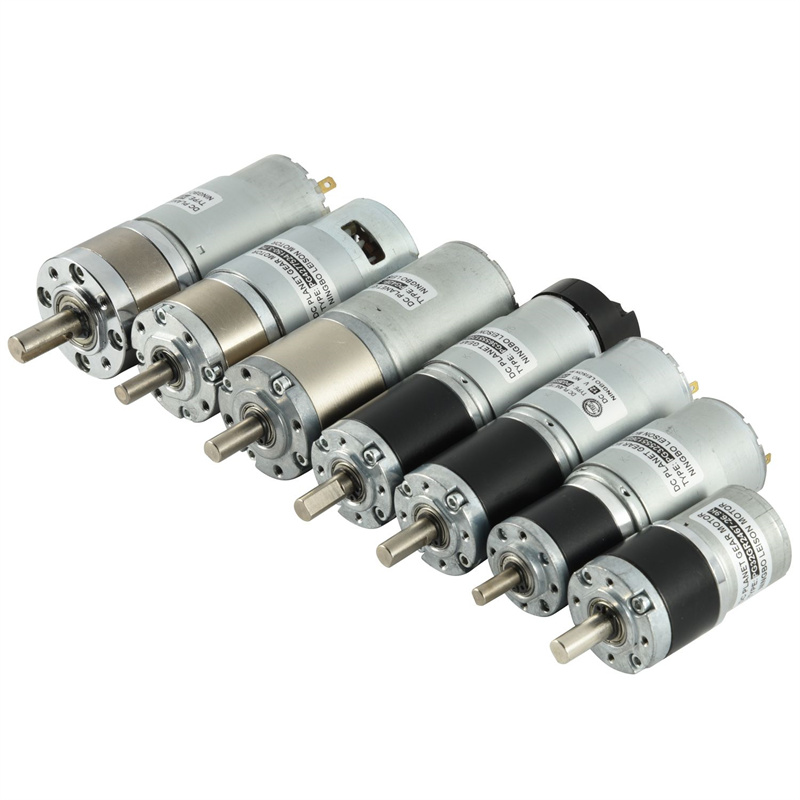
As essential power components for automation machinery and intelligent robots, dc planetary gear motor units feature a precision planetary gearbox for stable, high-torque transmission.
Available in 16mm, 28mm, 36mm and 42mm sizes, these versatile gear motor solutions cover micro and standard transmission applications. The miniature dc gear motor, 24v dc geared electric motors and dedicated robot dc motor variants are widely adopted in smart devices and industrial automation. High-performance models including PG36555 MOTOR and PG45775 MOTOR also fall into this reliable motor series. Like all precision drive components, these motors may develop common operational faults after long-term use, and proper troubleshooting is critical for consistent equipment stability.
Common Faults and Professional Solutions
DC planetary gear motors usually suffer from four types of frequent faults during daily operation. The detailed fault analysis and practical solutions are as follows:
1. Failure to start after idle or restart
2. Irregular impact noise and friction abnormal sound inside the planetary gearbox
3. Motor runs normally but the output shaft keeps static without power output
4. Output shaft wear, deformation and shaft breakage failure
1. Motor Startup Failure
A dc planetary gear motor may fail to start properly when exposed to low temperatures or after prolonged idle storage. Cold conditions thicken internal lubricant grease, reducing fluidity and raising startup resistance, which triggers overload protection from the motor driver.
Additionally, metal iron scraps generated by long-term gear wear can jam the internal transmission structure and block normal startup. For temperature-induced startup issues, repeated short start cycles can warm up the grease and restore normal operation. If debris blockage occurs, disassemble the unit to clean the gearbox or replace worn internal gears.
2. Internal Impact and Friction Noise
Unusual impact and friction noise during operation serves as an early warning of internal faults in any gear motor unit. Noise typically stems from displaced internal planet carriers and misaligned gear meshing, combined with accumulated wear debris inside the planetary
gearbox. These structural defects create persistent mechanical friction and collision sounds. Since such damage is irreversible through basic maintenance, the planetary gearbox or the entire miniature dc gear motor should be replaced promptly to prevent complete equipment failure.
3. Idle Running Without Output Shaft Rotation
It is not uncommon for 24v dc geared electric motors and robot dc motor units to power on and run idle without driving the output shaft. This issue mainly occurs when output bearings suffer displacement, deformation or severe wear. Faulty bearings cause gear slippage and break the power transmission path between the motor and output shaft. To resolve this problem, shut down the device and replace the damaged bearings, then thoroughly inspect internal gears for wear, cracks or deformation to restore full transmission functionality.
4. Output Shaft Breakage Failure
Output shaft breakage ranks among the most critical failures for a dc planetary gear motor, especially for high-load models such as PG36555 MOTOR and PG45775 MOTOR. Continuous overload operation, excessive radial load and prolonged operation at maximum rated limits lead to progressive metal fatigue, eventually causing shaft deformation and fracture. Operators must ensure actual working loads match motor rated parameters. Whenever the operating load exceeds the motor’ s capacity, upgrade to a properly sized gear motor to eliminate overload-related damage.
 En
En
 AR
AR
 BG
BG
 HR
HR
 CS
CS
 DA
DA
 NL
NL
 FI
FI
 FR
FR
 DE
DE
 EL
EL
 HI
HI
 IT
IT
 JA
JA
 KO
KO
 NO
NO
 PL
PL
 PT
PT
 RO
RO
 RU
RU
 ES
ES
 SV
SV
 TL
TL
 ID
ID
 SR
SR
 UK
UK
 VI
VI
 HU
HU
 TH
TH
 TR
TR
 FA
FA
 BN
BN